Polarized picks for flats, rivers and offshore, from $27 to $309.
By the ShadeTrek team · Last updated
#ad · Affiliate disclosure: As an Amazon Associate we earn from qualifying purchases. If you buy through our links we may earn a small commission at no extra cost to you. How we picked: we haven't lab-tested these glasses ourselves. Our picks come from manufacturer specs, expert reviews and what owners say in their reviews. Prices were checked on Oct 22, 2026 and can change.
On the water, polarized lenses aren't a luxury. They're what lets you see past the glare to the fish, the weed edge or the rock under the surface. The right lens color also depends a lot on where you fish.
We picked seven fishing sunglasses, from a $27 backup to Costa's mineral glass, using brand specs and thousands of angler reviews.
Comparison table
Prices are Amazon prices as of Oct 22, 2026. Our rating weighs value, lens quality and how well each pair does its main job.
Swipe sideways on mobile to see the full table. Weights marked "(listed)" come from the Amazon listing; "Not listed" means no reliable official number.
Over prescription glasses: none of these picks are fit-over designs. If you wear glasses, look for prescription versions from the brand (we haven't verified Rx availability for each model) or a dedicated fit-over frame.
580 mineral glass: very clear and scratch-resistant
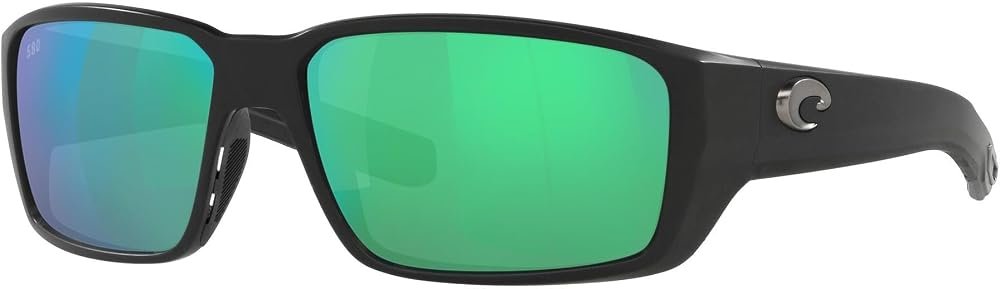
Green mirror tuned for inshore and flats
Wraps to block side glare
Case included
Cons
$309
Glass is heavier
Mixed, small Amazon rating sample (3.7 from 25)
Who it's for
Anglers and boaters who spend hours staring at bright water and want to see into it.
What stands out
Costa built its reputation on the water, and the Fantail PRO is a fishing-first frame. The 580G lenses are polarized mineral glass, which Costa calls its clearest and most scratch-resistant lens, and the green mirror tint is built for inshore and flats fishing, where you want contrast in bright, shallow water. The rectangular frame wraps enough to cut side glare, and it's made from co-injected nylon with bio-resin. A case and cleaning cloth come in the box.
Downsides
This is one of the priciest picks at $309 on Amazon, and glass adds weight compared with polycarbonate. Amazon has only 25 ratings at 3.7 stars, a small sample, so check that you're buying from Costa's own storefront. If you don't fish or boat, you're paying for features you won't use.
Verdict: If fishing is the main reason you're buying sunglasses, this is the pair. For everything else, the Sunski or Smith make more sense.
Offshore and big-water anglers with bigger faces who want the darkest, clearest glass Costa makes.
What stands out
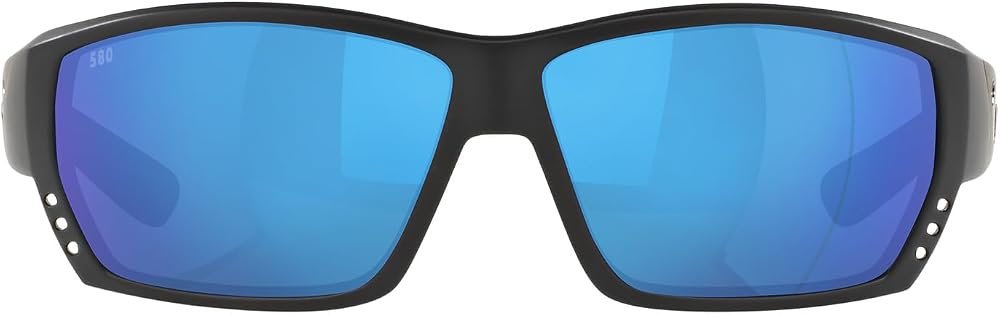
Tuna Alley is a large, wraparound Costa frame (62 mm lenses) with 580G polarized glass and a blue mirror over a gray base. Costa says this combo is best for bright, full sun on open water and offshore. The big frame blocks light from the top and sides, which matters when you're on the water for eight hours. 880+ Amazon owners rate it 4.7 stars, among the strongest ratings in our fishing picks.
Downsides
It's big and heavy-ish compared with plastic lenses, and too large for small faces. At $296 it's a real investment. The blue mirror is less ideal for shallow flats, where green or copper works better.
Verdict: The best offshore pick. If you fish big water in full sun, this is the one.
Fly anglers and kayak fishers who want maximum light blocking and a frame that stays on.
What stands out
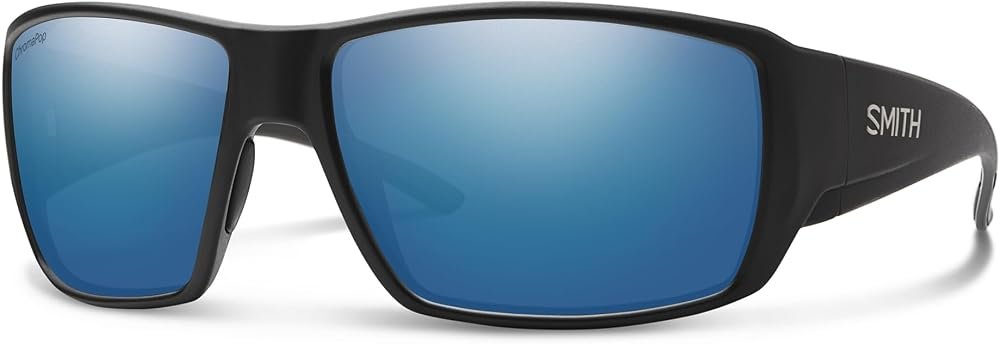
Guide's Choice is Smith's dedicated fishing frame. It's big and wraps far around, so very little light leaks in from the sides. It uses ChromaPop polarized lenses with smudge- and moisture-resistant coatings, an Evolve bio-based frame and spring hinges for a snug fit. Smith includes a detachable leash, hard case and pouch, and says it has been featured by GearJunkie.
Downsides
Only 11 Amazon ratings on this listing, so owner feedback is thin. At $237 it's expensive, and the big frame looks like fishing gear because it is.
Verdict: A great fishing frame, and a good alternative to Costa if you like Smith's lens tint.
Anglers who want a real fishing frame for about $60.
What stands out
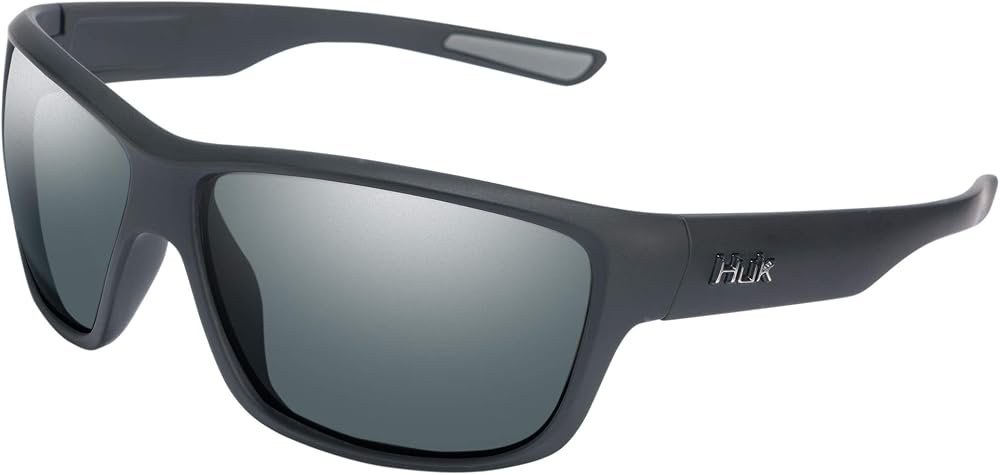
HUK makes fishing apparel and gear, and its polarized sunglasses are built for the water. You get scratch- and impact-resistant polarized polycarbonate lenses, a TR90 frame that holds its shape, an 8-base wrap and non-slip rubber temple tips. HUK lists the fit as medium-large, and 220+ owners rate it 4.4 stars.
Downsides
Polycarbonate can't match glass for clarity. HUK doesn't list weight or VLT on Amazon, and the Amazon title doesn't name the model clearly, so double-check the frame before buying.
Verdict: The best value fishing frame in our picks. It gets you 80% of a Costa for a fifth of the price.
Boaters and anglers who want Oakley optics with fishing-specific details.
What stands out
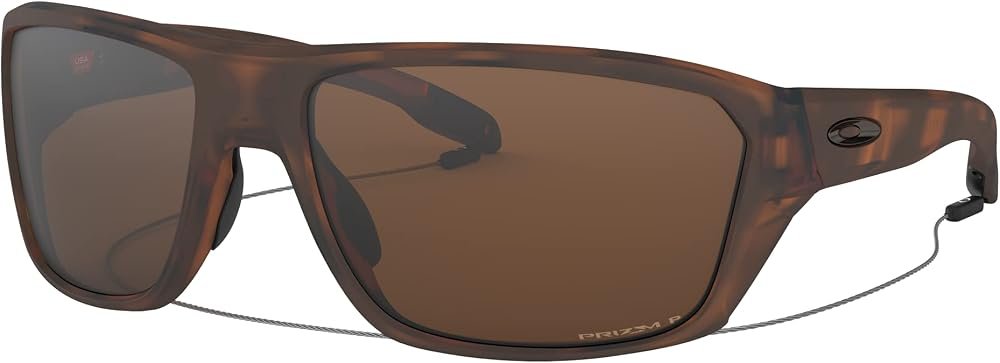
Split Shot is Oakley's water frame. The listing says it's polarized, with 64 mm lenses, a 17 mm bridge and 132 mm temples, so it's a large fit. Oakley markets it as a frame for fishing and boating. Prizm lenses aim to boost contrast, which helps on bright water.
Downsides
At $286 it's pricey, and there are only 60 Amazon ratings (4.4 stars). The frame is big and won't suit small faces. Amazon lists 200 g, which is likely the shipping weight, so we show weight as not listed.
Verdict: A strong premium option if you're already an Oakley fan. Otherwise, Costa and Smith are equally good.
Budget anglers who want a sporty wrap with a scratch-resistant coating.
What stands out
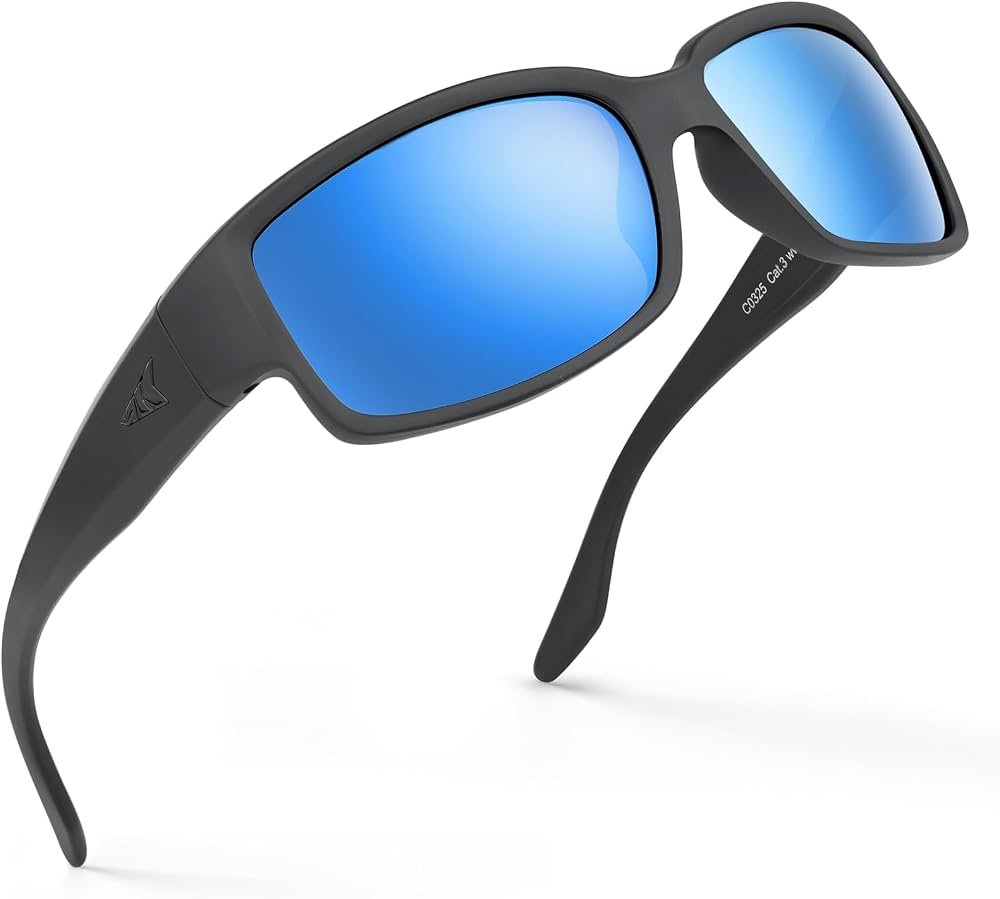
KastKing is a big name in budget fishing gear, and the Skidaway has nearly 9,900 Amazon ratings at 4.4 stars. It has 1.0 mm polarized TAC lenses with KastKing's PuriVex coating, which the brand says resists scratches and repels dirt, oil and water. The Grilamid frame is light and flexible. The smoke lens in our link gives true colors in bright sun.
Downsides
TAC lenses still don't match polycarbonate or glass optically. Weight isn't listed, and the sporty wrap looks very "fishing gear."
Verdict: A very popular budget fishing wrap. Great value and a good spare.
Anglers on a tight budget, or anyone who needs a spare pair in the tackle box.
What stands out
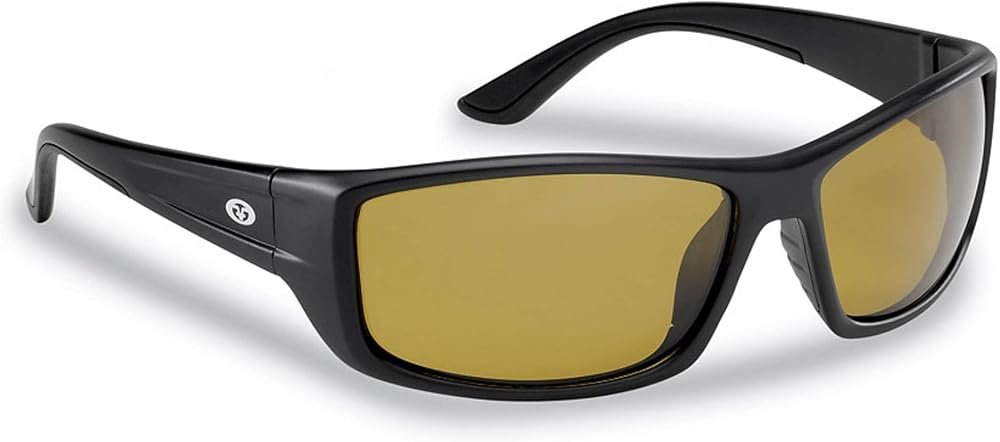
Flying Fisherman has made budget polarized fishing glasses since 1985, and says its sunglasses are developed and tested by guides in the Florida Keys. The Buchanan has polarized triacetate lenses with the brand's AcuTint contrast tint, a Grilamid and polycarbonate frame, and 100% UV protection. 2,100+ owners rate it 4.4 stars.
Downsides
Triacetate lenses scratch more easily and aren't as sharp as polycarbonate or glass. There's no weight listed, and the build doesn't match premium frames.
Verdict: The best fishing pair under $30. Get it as your backup or your first real fishing pair.
How to choose
Always polarized
For fishing, polarization is the whole point. It cuts surface glare so you can sight fish and read the water.
Lens color by water
Inshore, flats, shallow water: copper, amber or brown base with a green mirror. These boost contrast against sand and grass (Costa Fantail PRO, Rinconcito).
Offshore, open water: gray base with a blue mirror cuts the most light in full sun (Costa Tuna Alley).
Rivers, low light, dawn and dusk: lighter amber, yellow or rose.
Glass vs. polycarbonate
Glass (Costa 580G) is the clearest and most scratch-resistant, which helps when you're wiping off salt spray all day. Polycarbonate is lighter and won't shatter. Budget picks use TAC, which works but scratches faster.
Coverage and retention
Big wraparound frames block glare coming in from the sides. Use a leash: Smith includes one with Guide's Choice, and losing a $300 pair overboard is a common story.
Frequently asked questions
What color lens is best for fishing?
Copper or amber bases (often with a green mirror) for inshore and flats, gray with a blue mirror for offshore, and lighter amber or yellow for low light and rivers.
Do I need polarized sunglasses for fishing?
Yes. Polarization cuts the glare off the water so you can see beneath the surface. It's the single most important feature for anglers.
Is Costa 580G worth it?
If you fish often, many anglers say yes. The glass is clearer and more scratch-resistant than plastic. If you fish a few times a year, a $60 HUK or $30 KastKing does most of the job.
What does 580 mean on Costa sunglasses?
Costa's 580 lenses filter yellow light around the 580 nm wavelength, which Costa says sharpens contrast and color. The G means glass and P means polycarbonate.
What does UV400 mean?
UV400 means the lenses block light with wavelengths up to 400 nanometers, which covers UVA and UVB. It's the same as "100% UV protection." The American Academy of Ophthalmology recommends sunglasses that block 99 to 100% of UV. Every pair in this guide lists 100% UV or UV400 protection.
Glass or plastic lenses for saltwater?
Glass resists scratches from salt and sand better. Polycarbonate is lighter and safer on impact. Rinse either in fresh water after a saltwater trip.
Sources
Amazon product listings for each pick (prices, specs, rating counts), checked Oct 22, 2026
#ad · Links to Amazon are affiliate links. As an Amazon Associate, ShadeTrek earns from qualifying purchases. That never changes which products we pick or what we say about them. Prices and availability are set by the retailer and can change at any time.