Seven pairs worth your money in 2026, plus rankings and a filter for all 52 pairs across our guides.
By the ShadeTrek team · Last updated
#ad · Affiliate disclosure: As an Amazon Associate we earn from qualifying purchases. If you buy through our links we may earn a small commission at no extra cost to you. How we picked: we haven't lab-tested these glasses ourselves. Our picks come from manufacturer specs, expert reviews and what owners say in their reviews. Prices were checked on Oct 22, 2026 and can change.
Good sunglasses do more than look nice. They block UV that can damage your eyes over time, cut the glare that makes you squint all afternoon, and help you spot the root on the trail or the fish under the surface. The trouble is that sunglasses range from $15 to $400, and the price doesn't tell you much about which pair is right for you.
So we narrowed it down to seven pairs that cover the most common needs, compared them side by side, and wrote down the honest tradeoffs. If you only read one thing, read the table. If you're not sure what you need, jump to How to choose.
Comparison table
Prices are Amazon prices as of Oct 22, 2026. Our rating weighs value, lens quality and how well each pair does its main job.
Swipe sideways on mobile to see the full table. Weights marked "(listed)" come from the Amazon listing; "Not listed" means no reliable official number.
☀️ On sale this week
Real discounts we found on Oct 22, 2026. Sales end without warning, so check the price before you buy.
31% off
Smith Lowdown 2 ChromaPop Polarized
$147.73$217.00at REI
Our Best Upgrade pick, about $69 under its Amazon price.
Prices checked Oct 22, 2026 at REI. Not affiliate links.
Ranked: best by purpose, style, fit and lens
Top picks from all 52 sunglasses across our guides, ranked by our rating (ties broken by number of Amazon ratings). Click any name for the full review.
Over prescription glasses: none of these picks are fit-over designs. If you wear glasses, look for prescription versions from the brand (we haven't verified Rx availability for each model) or a dedicated fit-over frame.
Lifetime frame warranty, plus lens replacement kits
Case and pouch included
Cons
TAC lenses scratch more easily than glass or premium poly
Too dark for deep shade
Runs wide on narrow faces
Who it's for
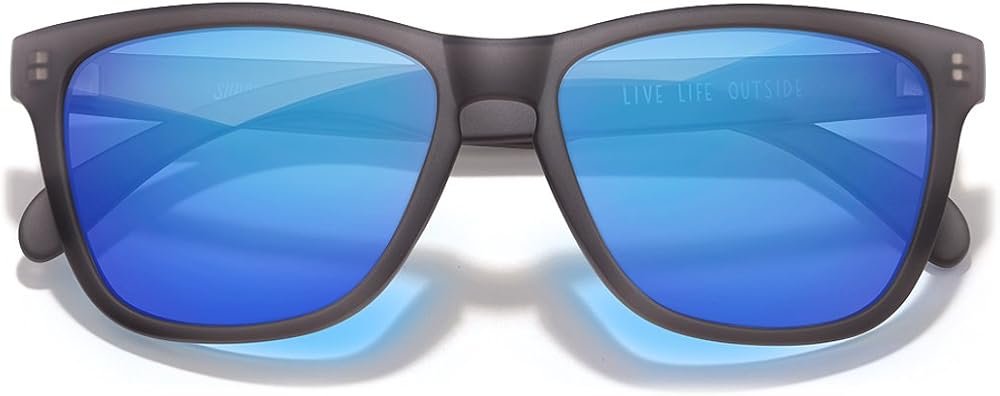
Most people. If you want one pair that lives in the car, goes on the trail and doesn't make you nervous at the beach, start here.
What stands out
The Headland hits a sweet spot that's hard to find: real polarized lenses, a wide frame that blocks light from the sides, and a light recycled-plastic build for under sixty bucks. Sunski lists the lenses at 15% visible light transmission (VLT), which puts them in the bright-sun category, and the 6-base curve wraps a little without looking like race glasses. A case and a microfiber pouch come in the box. Sunski's lifetime warranty covers the frames against defects and breaks from normal use (one replacement per pair, shipping not included). Lenses aren't covered, but Sunski sells replacement lens kits.
Downsides
The lenses are TAC polarized film, not glass or high-end polycarbonate, so they'll scratch sooner than a Smith or Costa if you toss them on the dash. The fit runs medium-to-wide, so narrow faces may find them slipping. At 15% VLT they're dark, which is great at noon and a little much in deep forest shade.
Verdict: The pair we'd tell a friend to buy first. You get most of what a $200 pair does for a quarter of the price, and the frame warranty takes the sting out of breaking them.
Runners, people who lose sunglasses, and anyone who wants a polarized pair without thinking too hard about it.
What stands out
goodr built its name on one idea: sport sunglasses that don't bounce or slip and don't cost a fortune. The OG has a grippy coating on the frame and silicone nose inserts so it stays put when you're sweaty, and every pair is polarized with UV400 protection. With nearly 10,000 ratings averaging 4.5 stars on Amazon, it's one of the most-rated pairs we cover, and the recurring theme is simple: they fit, they stay on, and they're cheap enough to replace.
Downsides
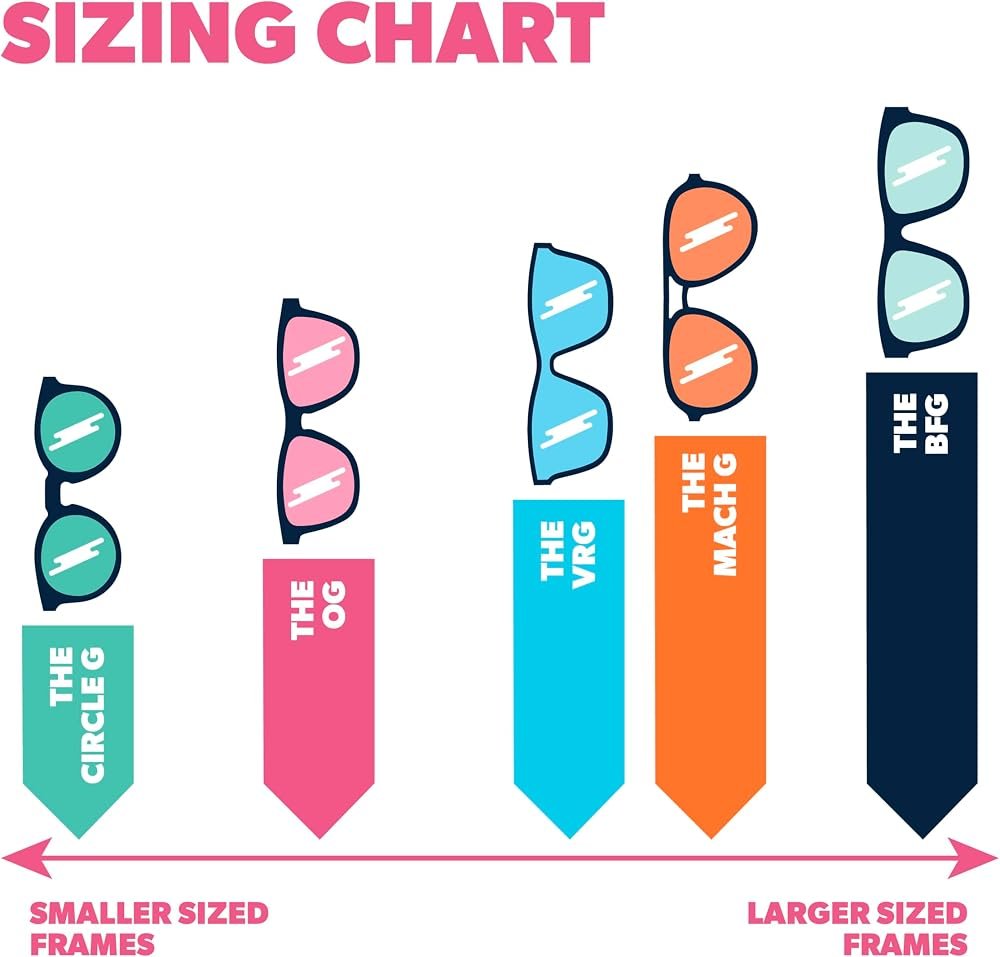
The frame is light plastic and feels like it. The lenses are basic polarized polycarbonate without the contrast tuning of ChromaPop or Prizm, and there's no case in the box. The OG fits small-to-medium faces best, so bigger heads should look at the goodr BFG instead.
Verdict: Hard to beat at $30. Buy two, keep one in your run bag and one in the car.
Someone ready to spend real money on one pair they'll wear every day for years.
What stands out
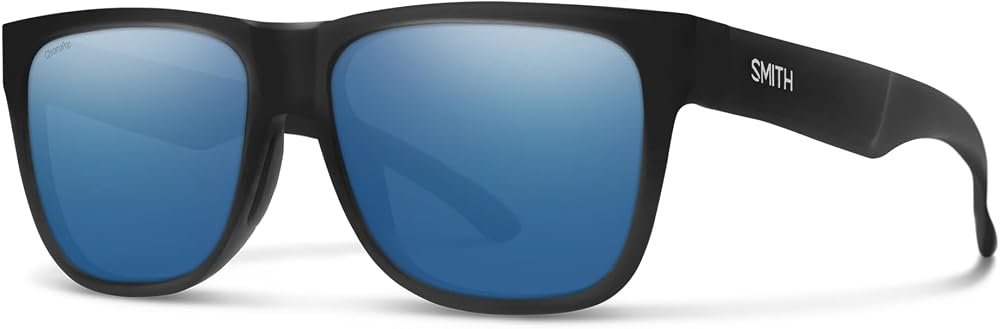
The Lowdown 2 looks like a classic wayfarer-style frame, but the lenses are where your money goes. Smith's ChromaPop filters the wavelengths where colors blur together, so edges, trail roots and water surfaces look sharper and colors look richer. The lenses get smudge- and moisture-resistant coatings, which matters when you're sweating up a climb. The frame is Smith's bio-based Evolve material, and rubber nose pads hold on when you sweat. Smith says it has been featured by Switchback Travel, Backpacker and Tom's Guide.
Downsides
At $217 on Amazon it's a big step up from our overall pick, and the polycarbonate version will still scratch if you're careless. The fit is medium; Smith makes a Lowdown 2 XL for larger faces. Amazon ratings are thin (42 reviews, 4.0 stars). If you shop around, REI currently has it for less (see the sale box).
Verdict: The best sharp-all-day pair on the list. Worth it if you wear sunglasses daily, and even better on sale.
580 mineral glass: very clear and scratch-resistant
Green mirror tuned for inshore and flats
Wraps to block side glare
Case included
Cons
$309
Glass is heavier
Mixed, small Amazon rating sample (3.7 from 25)
Who it's for
Anglers and boaters who spend hours staring at bright water and want to see into it.
What stands out
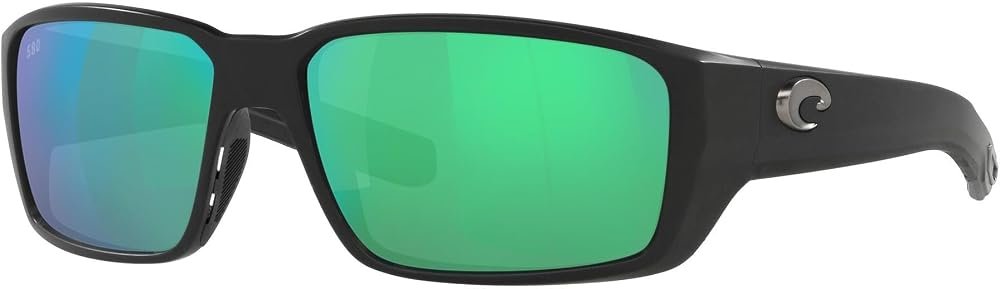
Costa built its reputation on the water, and the Fantail PRO is a fishing-first frame. The 580G lenses are polarized mineral glass, which Costa calls its clearest and most scratch-resistant lens, and the green mirror tint is built for inshore and flats fishing, where you want contrast in bright, shallow water. The rectangular frame wraps enough to cut side glare, and it's made from co-injected nylon with bio-resin. A case and cleaning cloth come in the box.
Downsides
This is one of the priciest picks at $309 on Amazon, and glass adds weight compared with polycarbonate. Amazon has only 25 ratings at 3.7 stars, a small sample, so check that you're buying from Costa's own storefront. If you don't fish or boat, you're paying for features you won't use.
Verdict: If fishing is the main reason you're buying sunglasses, this is the pair. For everything else, the Sunski or Smith make more sense.
Riders who want big, wraparound coverage and lenses tuned for reading the road at speed.
What stands out
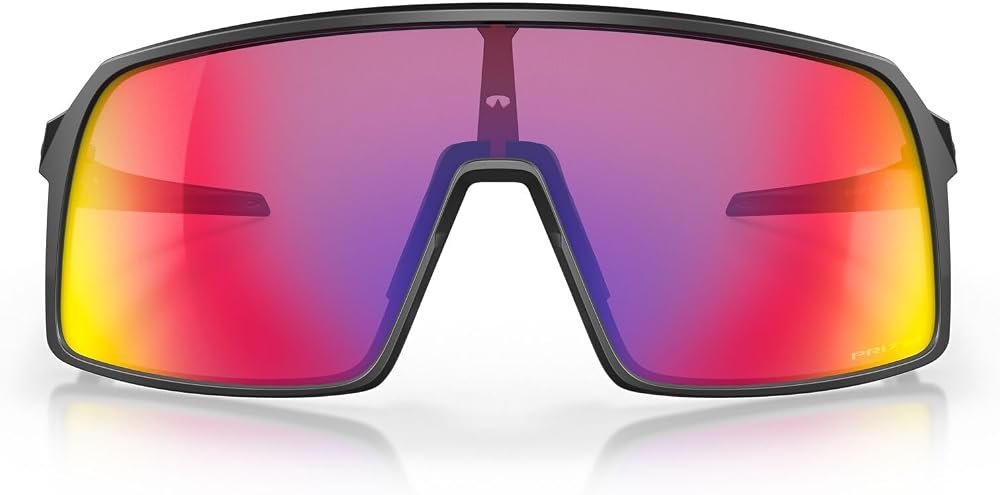
The Sutro is a big shield lens that covers your whole field of view, which keeps wind, grit and low sun out of your eyes when you're tucked in on the bike. Oakley's Prizm lenses are tuned to boost contrast, so potholes, gravel and painted lines stand out. The listing we link is not polarized, and for cycling that's often a plus: polarization can hide wet patches and oil and make bike computers harder to read. With more than 1,000 ratings averaging 4.6 stars, it's one of the best-reviewed premium pairs we cover.
Downsides
The look is loud, and it's not a pair you'll wear to dinner. Without polarization it's a poor pick for fishing or the beach. At $203 you can find cheaper cycling shades if you don't need Oakley optics.
Verdict: Our pick for people who ride a lot. Coverage and contrast are what matter on the bike, and the Sutro does both well.
Anyone who wants a classic square frame for town, the beach or the lake, at a price that doesn't hurt.
What stands out
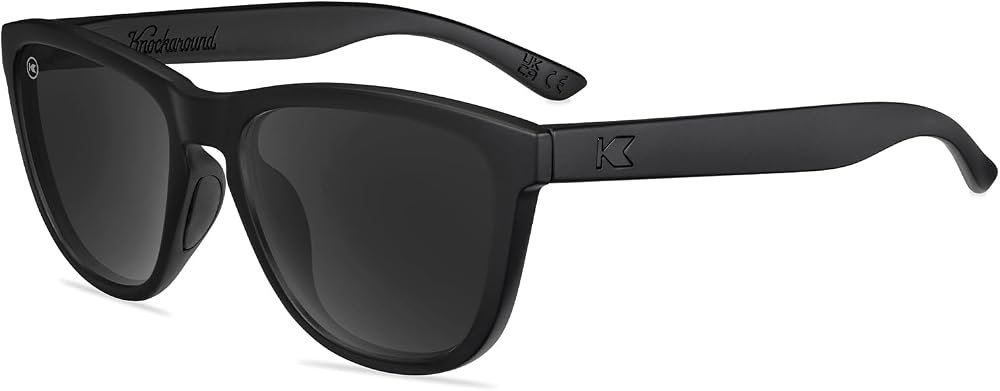
Knockaround's Premiums is a simple, good-looking square frame with polarized UV400 lenses the brand calls impact-resistant. The frame is lightweight polycarbonate sized for medium faces, and a microfiber pouch that doubles as a cleaning cloth comes in the box. It's the kind of pair you can leave in a beach bag all summer.
Downsides
This is a lifestyle frame, not sports gear. There's no grip coating or wrap, so it can slide when you're sweaty or moving fast. The lenses are basic polarized plastic, and Knockaround doesn't list weight or VLT on Amazon.
Verdict: A cheap, stylish everyday pair. Get it for the look, and use the goodr when you need something that stays put.
Runners, golfers and casual riders who want a light, no-fuss pair and don't need polarization.
What stands out
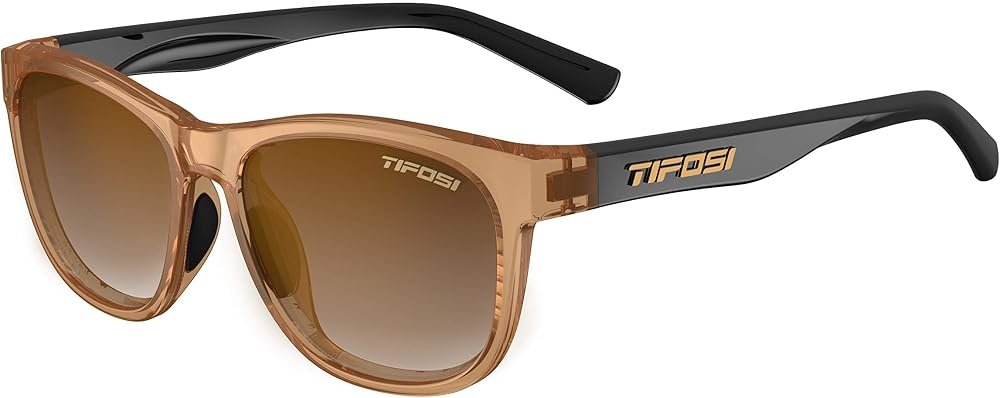
At 23 grams, the Swank is one of the lightest pairs we cover, and you'll forget you're wearing it. The frame is Tifosi's plant-based Thrive material with an integrated hinge that doesn't pull hair and hydrophilic nose pads that grip more as you sweat. The shatterproof polycarbonate lenses block 100% of UVA and UVB. More than 3,800 Amazon ratings at 4.4 stars back up the value.
Downsides
This version isn't polarized, so it won't cut glare off water or wet pavement. Tifosi lists the fit as small to medium. The brown gradient lens in our link is good in mixed light but not dark enough for long days on snow or open water.
Verdict: A great second pair for workouts. For the price of lunch you get a light, well-built frame that stays on.
How to choose sunglasses
Start with what you'll do most in them, then work through these six things in order. You don't need to get everything perfect. UV protection and fit matter most.
1. UV protection: non-negotiable
Look for "UV400" or "100% UVA/UVB protection" on the label. This is what protects your eyes from the long-term damage linked to cataracts and other eye problems, and the American Academy of Ophthalmology recommends blocking 99 to 100% of UV. The good news is it's cheap. A $30 pair can meet the standard just as well as a $300 one. Dark lenses without UV protection are worse than none, because your pupils open up and let more UV in.
2. Polarized or not
Polarized lenses cut reflected glare from water, snow, sand and pavement. For fishing, paddling, beach days, driving and most hiking, get polarized. For road cycling, skiing in icy conditions, or if you read screens a lot outdoors, a non-polarized contrast lens can be a better choice. More on this below.
3. Lens color
Gray: the most neutral. Colors look true, and it's good for bright, all-day sun and driving.
Brown, copper or amber: boosts contrast and depth, and is great for trails, golf, fishing in shallow water and mixed light.
Green: a balance of gray's true color and brown's contrast. Many people find it the most comfortable.
Rose or red: high contrast in flat light, popular for mountain biking and overcast days.
Yellow or clear: for low light, dawn, dusk and night riding.
Mirror coatings (blue, green, silver) sit on top of a base tint and bounce away extra light. They're good for very bright conditions like open water or snow.
4. Darkness (VLT)
VLT, or visible light transmission, tells you how much light gets through the lens. Lower numbers are darker.
VLT
Good for
Under 10%
Glacier travel, high-altitude snow, very bright water
10–18%
Bright sun: beach, open water, desert hiking
18–40%
Everyday, mixed sun and shade, most trail use
40%+
Overcast days, forest shade, dusk, night
If you're often in and out of shade, like on wooded trails or MTB rides, look for a medium VLT or a photochromic lens that darkens in sun. Smith offers a photochromic Lowdown 2.
5. Fit
Fit is the reason most people stop wearing a pair. Check the lens width, printed on the inner temple arm as something like "55-18-145" (lens width, bridge, temple length). Roughly, under 53 mm fits narrow faces, 54 to 57 mm is medium and 58 mm and up is wide. Good sport frames have grippy nose pads and temple tips so they don't slide when you sweat. Wraparound frames like the Oakley Sutro block more side light and wind. Flatter lifestyle frames like the Knockaround look better in town but let light in at the edges.
6. Lens and frame materials
Glass lenses are the clearest and most scratch-resistant, but they're heavier and can shatter. They're great for fishing and driving (for example Costa 580G or Smith ChromaPop Glass).
Polycarbonate is light, very impact-resistant and the standard for sports. It scratches more easily, so look for a hard coating.
TAC is a lighter, cheaper polarized film lens used on many budget and mid-range pairs. It works well, just treat it gently.
Frames: TR90 and nylon flex without breaking, acetate feels premium but is heavier, and plant-based materials (Smith Evolve, Tifosi Thrive, Costa bio-resin) are increasingly common and perform about the same.
Quick picks by activity: Hiking: polarized, medium-dark, brown or green (Sunski Headland, Smith Lowdown 2). Fishing: polarized glass, copper or green mirror (Costa Fantail PRO). Road cycling: wraparound contrast lens, often non-polarized (Oakley Sutro). Running: light, grippy frame (goodr OG, Tifosi Swank). Beach and town: polarized classic frame (Knockaround Premiums).
Polarized vs. regular sunglasses
When sunlight bounces off a flat surface like a lake, a wet road or a car windshield, much of it becomes horizontally polarized, meaning the light waves line up and hit your eyes as harsh glare. A polarized lens has a filter with vertical "slats" that blocks that horizontal light while letting the rest through. The result: less squinting, less eye strain, and the ability to see into water instead of just its reflection. That last part is why anglers swear by them.
Regular tinted lenses just make everything darker. They cut brightness evenly but do nothing special about glare. They're not worse, just different, and they have a few real advantages:
Screens: polarized lenses can make phones, GPS units and car dashboards look dim or rainbow-streaked at some angles.
Ice and oil: on a bike or skis, glare off a slick spot is actually a useful warning, and polarization can hide it.
Cost: non-polarized lenses with great contrast tech, like Oakley Prizm Road, can be a better tool for riding.
Important: polarization and UV protection are separate. Polarized lenses aren't automatically UV-blocking, and plenty of non-polarized lenses block 100% of UV. Check for UV400 either way.
Easy test: in the store, look at a phone screen or a car window through the lens and rotate it 90 degrees. If the view darkens or changes, it's polarized.
Frequently asked questions
Are polarized sunglasses better?
For most outdoor use, yes. Polarized lenses cut the glare that bounces off water, snow, roads and car hoods, which makes things look clearer and is easier on your eyes. They're not ideal for everything: they can hide icy or oily patches, make phone and bike computer screens look dark, and some pilots and skiers avoid them. Polarization also has nothing to do with UV protection, so a pair can be polarized and still need a UV400 rating.
What does UV400 mean?
UV400 means the lenses block light with wavelengths up to 400 nanometers, which covers both UVA and UVB rays. It's the same as "100% UV protection." The American Academy of Ophthalmology recommends sunglasses that block 99 to 100% of UV light. Every pair on this list meets that bar.
Do expensive sunglasses protect your eyes better?
Not when it comes to UV. A $30 pair with UV400 blocks UV just as well as a $300 pair. What you pay for at the high end is better optical clarity, scratch-resistant coatings or glass, contrast-boosting lens tech like ChromaPop or Prizm, better hinges and warranties.
What lens color is best for fishing?
For bright sun on shallow or inshore water, green or blue mirror lenses over a copper or gray base are popular. Copper and amber bases boost contrast, which helps you spot fish and structure. For offshore and open water, blue mirror over gray is common. In low light, a lighter amber or rose lens works better.
Should cycling sunglasses be polarized?
It's personal, but many road riders skip polarization. It can hide wet patches and oil slicks and make GPS screens hard to read. Contrast-boosting lenses like Oakley Prizm Road or Smith ChromaPop are a popular alternative. Mountain bikers often want lighter lenses (higher VLT) for shady trails.
What is VLT?
Visible light transmission (VLT) is the percentage of light that gets through the lens. Lower is darker. Roughly: 8 to 18% for bright sun, water and snow, 18 to 40% for everyday mixed light, and 40% and up for shade, overcast days and dusk. The Sunski Headland's 15% VLT is in the bright-sun range.
How do I know if sunglasses will fit?
Check the lens width in millimeters, usually 50 to 62 mm. Under about 53 mm fits smaller faces, 54 to 57 mm is medium and 58 mm and up is large. They should sit snug without pinching your temples, stay put when you look down and not rest on your cheeks when you smile. Most brands print the size inside the temple arm.
Glass or polycarbonate lenses?
Glass lenses (like Costa's 580G) are the clearest and most scratch-resistant, but they're heavier and can crack on a hard hit. Polycarbonate and other plastics are lighter and much more impact-resistant, which makes them the better pick for sports. Most people are happiest with polycarbonate. Anglers and drivers who want maximum clarity often go glass.
Sources
Amazon product listings for each pick (prices, specs, rating counts), checked Oct 22, 2026
REI product pages for the sale prices above, checked Oct 22, 2026
#ad · Links to Amazon are affiliate links. As an Amazon Associate, ShadeTrek earns from qualifying purchases. That never changes which products we pick or what we say about them. Prices and availability are set by the retailer and can change at any time.